Analyzing Medicaid Website Activity: Indiana Leads with Significant Engagement

Overview of Medicaid Website Activity
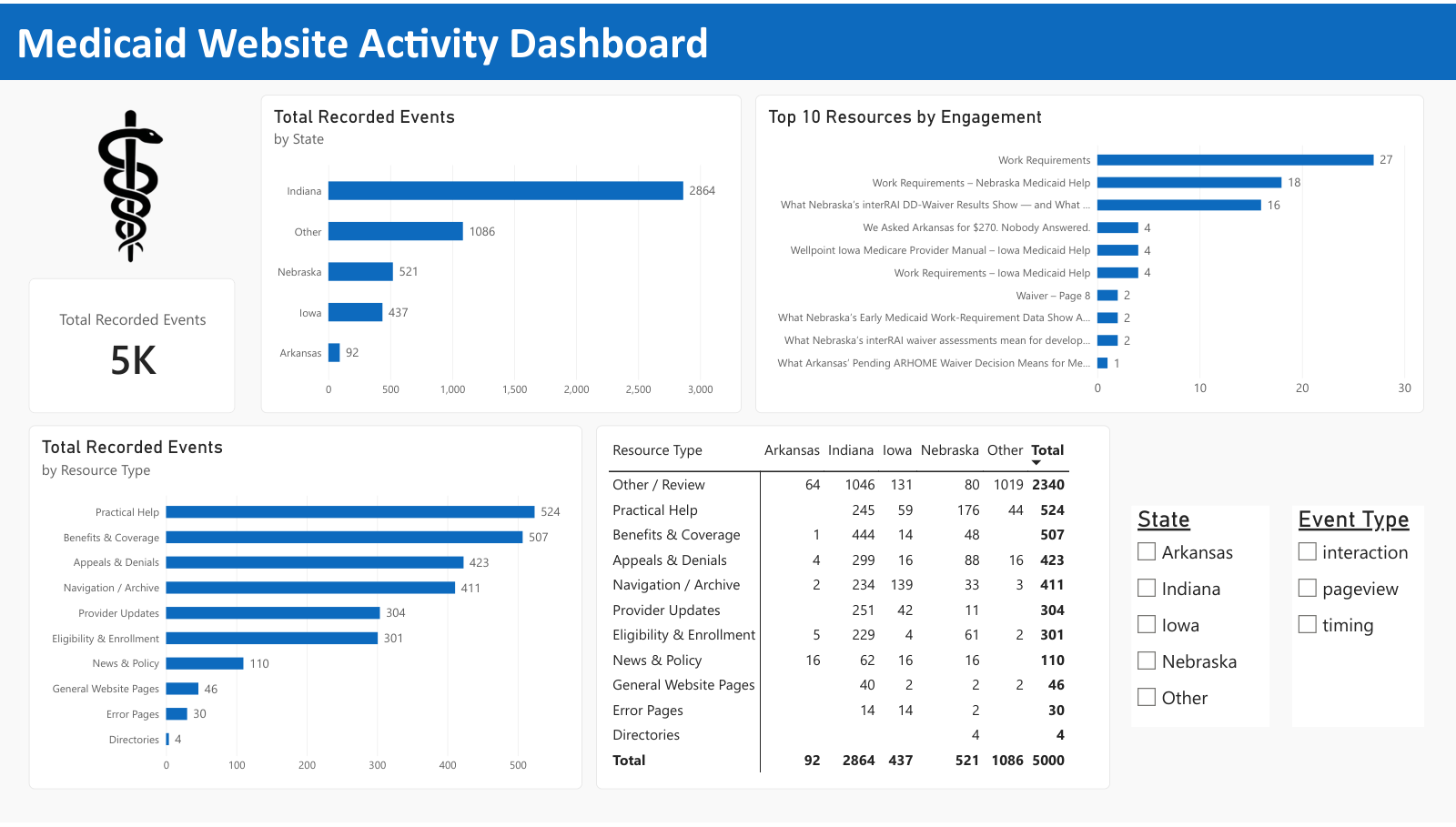
In an analysis of Medicaid website activity, recent data highlights engagement patterns across different states and resource types. As of the latest unspecified period, the total recorded events reached 5,000, showcasing significant user interaction with various Medicaid resources.
State-Specific Engagement
Indiana dominates the engagement metrics with a total of 2,864 recorded events. Other states such as Nebraska and Iowa follow with 521 and 437 events respectively. Arkansas recorded the lowest engagement with only 92 events. An additional category labeled "Other" amassed 1,086 events, illustrating a substantial number of interactions not attributed to a specific state.
Top Resources by Engagement
Among the most engaged resources, "Work Requirements" in Nebraska topped the list with 27 interactions. Other notable resources include evaluations of waiver results and assessments, underscoring users' interests in understanding policy impacts and requirements.
Resource Type Engagement
The website categorizes events by resource type, shedding light on areas of user interest. "Practical Help" leads with 524 interactions, followed closely by "Benefits & Coverage" at 507 events. "Appeals & Denials" and "Navigation / Archive" also see significant engagement, highlighting issues of prime concern for Medicaid website visitors.
State-Specific Resource Engagement
Within states, Indiana shows high interaction with "Benefits & Coverage" (444 events) and "Practical Help" (59 events). Nebraska users actively engaged with "Appeals & Denials" (88 events) and "Navigation / Archive" (33 events), indicating a focus on navigating complex healthcare decisions.
Conclusion
This data provides crucial insights into Medicaid users' needs and priorities, indicating a strong demand for practical information and coverage details. As Medicaid policies continue to evolve, understanding these trends will help align resources with user interests, improving access and comprehension for users across the states.