Medicaid: My Learning Curve

By: Andrea Drac
When it comes to Medicaid, the one thing I wish someone had told me sooner was everything. I first got Medicaid in April of 2020 through Indiana HIP and have spent most of my 30s on it. However, I never knew much about how it worked. That’s where my mom came in; the brains behind the operation. She worked in medical billing and dealt with insurance all the time so in hindsight, I’m not surprised she made the move to put me on HIP. All I knew was that my Ambetter card was now being swapped for an Anthem HIP card and I had the same doctors as always. Nothing really changed.
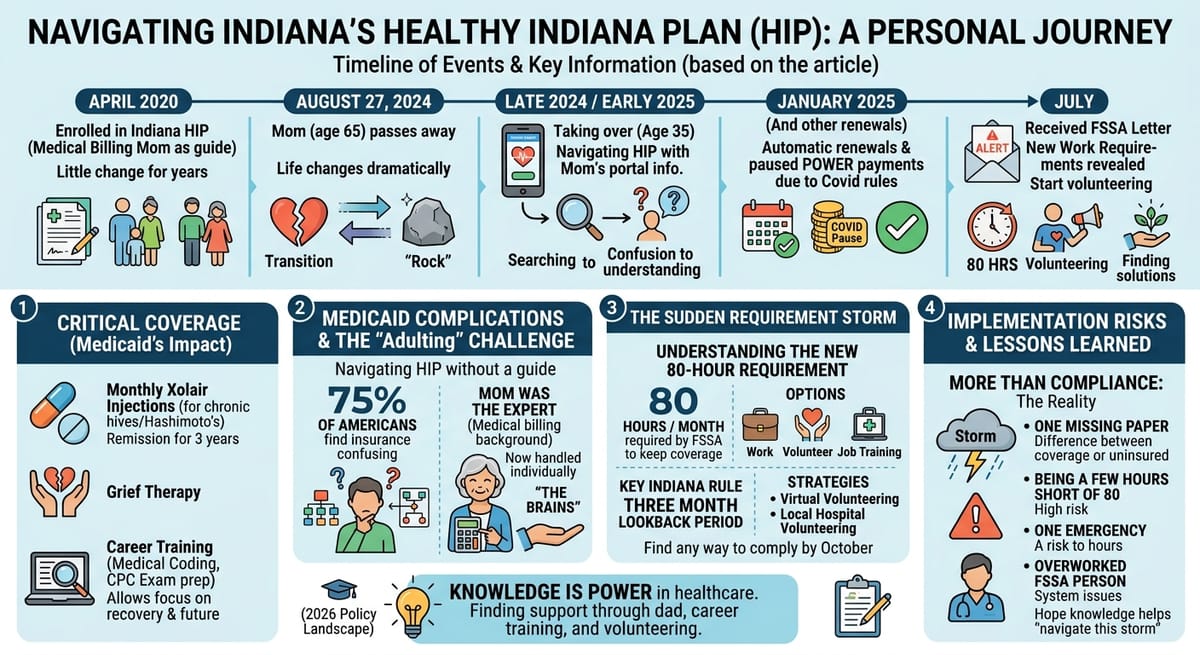
That is, until my mom passed away August 27, 2024, at the age of 65. I was a few weeks into being 35, but it was at that moment that I grew up. Not only did I lose my rock, but I also had to handle adult things that she took care of behind the scenes. First and foremost was health insurance. My mom had the login for my portal on her phone so that was a start, but I had no idea if she was making payments or if there was anything I needed to do. HIP was more than just doctor visits and prescription refills. In 2023, I began receiving monthly Xolair injections for chronic hives caused by Hashimoto’s Thyroiditis. HIP covered those for me, and without them, I’d be full of swollen welts and not in a three-year remission.
I’m not alone in my insurance confusion. 75% of Americans don’t understand it, but it felt like I was starting from scratch. Thankfully after calling and chatting online with Member Services, I found out POWER Account payments were still paused from the Covid pandemic and my shots were renewed for the rest of the year. I was nervous wondering what I would need to do when my renewal date arrived in January 2025, but I got renewed automatically, another holdover measure from the Covid pandemic.
HIP has been great to me the last couple of years, as it’s allowed me to continue my healthcare while also going through the biggest life change of losing my mom. I’m also going through some career changes, transitioning from being a freelance writer to medical coding. I took a course in 2025 and am going for a second attempt at the CPC Exam to become certified in the field. HIP is covering my grief therapy as well. Throughout all of this, I’m so thankful for my dad being my rock and helping me so much financially as we navigate this new life.
Unfortunately, life hit a curveball when I received a letter from FSSA in July. I’ve been fortunate to not have many issues with them other than general letters, but I was thrown for a loop when I learned for the first time about the 80 hours I would need to keep my coverage by either working, volunteering, or being in job training. This is a result of President Trump’s One Big Beautiful Bill, but Indiana has upped the ante and made the lookback period three months. As someone who is between careers and has a renewal date this January, I suddenly had to find something, anything to keep my coverage starting in October. Volunteering became the way to go for the moment. I found a great virtual volunteer role just in time and looking into volunteering at a nearby hospital.
However, as I’m learning more about these work requirements nationally as well as statewide, I’m realizing it’s not just finding something to meet the requirements that’s important. It’s knowing that one missing paper, being a few hours short of 80, one emergency, or one overworked FSSA person is the difference between having HIP coverage or going uninsured. I wish my mom were still here to explain things, to make it all better. I just hope the knowledge I’ve learned and will continue to learn will help navigate this storm as work requirements begin January 1st.